
Posts

Socially-Semantic Markup – Link Facebook and Google Plus (+1) to Your Website

A primary objective of work in designing and deploying websites is to enable an evolved online user experience, for human users of the website. For many websites and their owners, the core website is also a source of information, marketing messages and social dialogue that lives elsewhere. "Elsewhere" can mean any Internet-enabled channel, from social media like Facebook, Google+ and Twitter, to Search Engines, RSS feed networks, Directories, eCommerce platforms, Mobile Apps and content syndication engines. In short, a website deployment should, as standard practice, assume the web content to be mobile and accessible (in part or in whole) from many other places – and therefore should be as accurate, optimized and standards-based as possible. A website should not only be a destination, but a source of content fragments and descriptors that "carry the flag" around the Internet, to search engines and social media networks, while working hard to escort users back. ...
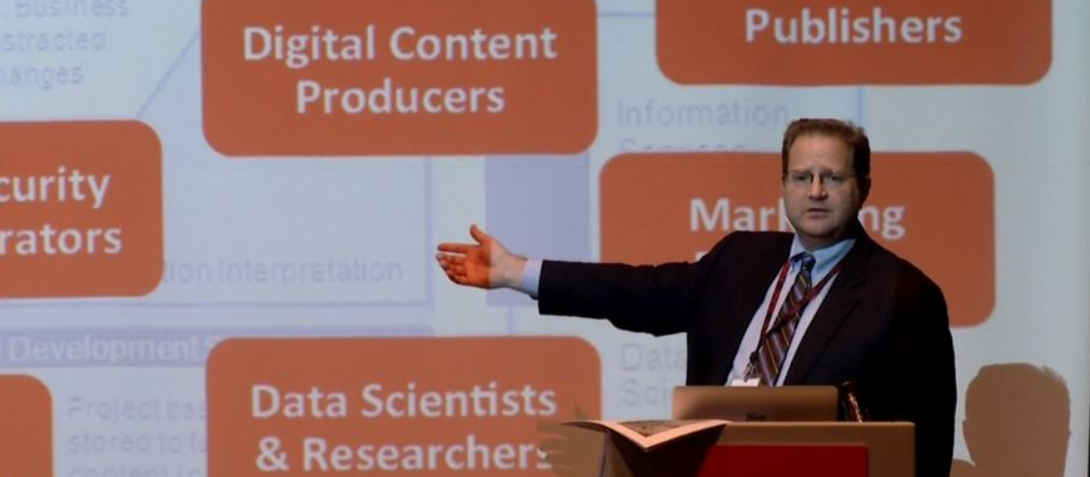
SOA-UX, Services-Oriented User Experience Design Architecture

During a recent solution strategy session for a very large enterprise, a need developed for creating visual prototypes and simulations illustrating the end-state of the enterprise system to be built. The system, or really "solution" (since the ROI would be derived not only from IT, but also from organization change, process re-engineering, physical and digital asset value realization) included many audiences and stakeholder roles plus many distinct (though integrated) business services. "Services" is the key term here, i.e. not "applications" or "websites" – customers would find and use these business services offered by the company, governed with managed agreements and supported by information technology. The best practice SOA methodologies separate business concerns from underlying fulfillment concerns, in a manner that enables reuse and evolution of each – maximizing ROI (hopefully). Business service architecture strategies begin frequently wi...

Corporate Knowledge Management Applied to Online Customer Engagement

There’s certainly no shortage of stories regarding customer engagement and social media interactivity by many businesses on the Internet, especially when responding to negative feedback and proactively shaping the amplified, echo-chamber public dialogue that follows. PR and marketing staff may be tuned to trending commentary through "social listening" tools, search engine alerts and direct monitoring of inbound call center or emailed sentiment. However, especially with businesses that sell quite sophisticated or complex goods and services, it can be really difficult to find and assign – quickly - the right SMEs to evaluate and help respond to quickly growing community sentiment or complaints. SMEs who not only explicitly understand the product, but who also may have valuable, tacit understanding of the intersecting contexts – i.e. how the product's being used, the nature of the user community, and perhaps some knowledge of implicit product use guidelines (that don't s...

Google Rich Snipping of Microdata, Microformats or RDFa for SEO and CTRs

Google’s increasing emphasis this year on its “ Rich Snippets ” program (an observation obtained directly from one of their Client Account Managers) should encourage businesses, and especially local vendors and eCommerce merchants, to start using additional “semantic markup” for their HTML. “Semantic markup” is additional tagging (or labels) using structured data that are added to help parsers and programs that read your webpage to understand truly what specific content areas or fragments are about. Google currently supports labels about reviews, people profiles, products, business listings, recipes, and events. The labels are invisible to users, but not to search engines. For example, a local business that states it’s located at “123 Reston Drive, Florida City, California” – might drive search engines or 3rd-party location apps a little nutty trying to figure out where it is. Likewise, a single product page may have testimonial content associated with both the product, and the compa...

Digital Asset ROI for the Entire IT Enterprise - Analytics Aren't Just For Websites

The use of website analytics and reporting software isn’t new to most website owners. Tracking and analyzing the usage of your website by people and search engine ‘bots are obviously essential activities for validating your investment. Typical metrics tracked include number of visits by various user types, number of downloads or access to particular content, and navigation routes most commonly taken by visitors to, through, and out of your site. These metrics, perhaps aggregated into meaningful reports (i.e. overall unique visits per month), tell you how your site is performing. But are these reports evaluated for the impact or opportunities they reveal with respect to your entire IT budget? In other words, do your web analytic reports support “Key Performance Indicators” (KPIs) for your entire IT Investment portfolio, not just the website maintenance budget? If your answer to this is “no”, your overall organizational IT investment may not be properly balanced to deliver the maximum ...

Washington DC Social Media Outlook 2011 - Potomac TechWire Summary

Social Media prognostications are always fun to consider, and try (if there’s a Beta version) – but today’s Potomac TechWire "Social Media Outlook 2011" breakfast was all business, with true ROI. As a Rohit Bhargava put it, “what’s the ROI of attending this meeting?” It’s the “social” ROI, vs. the “media” ROI – and it’s actually not that hard to categorize and track. The general consensus by presenters and the panel boiled down to a few key topics for businesses to consider, learn more about, and take action upon – here’s a few important ones. (1) It’s true that there’s a tremendous actual and potential benefit for businesses in utilizing the “2 ½” major social media platforms, i.e. Facebook, Twitter and LinkedIn. But it’s equally true, that there’s likely equivalent benefit available in leveraging other social media channels and services that are similar to or actually integrated with “the mothership”. For example, using Quora for some knowledge research by audience segme...

Online, Interactive Digital Engagement Governance – Building a Content Governance 2.0 Strategy and Community

This will be the first in an ongoing set of entries about Interactive Digital Engagement Governance. Contact me or Navigation Arts in McLean, VA for more information, or for ideas regarding planning and implementing such a methodology at your organization. The concept of governance isn’t new at all to organizations building websites, whether inside (as with intranets and corporate portals) or exposed to the public. Simply put, the creation and management of web-enabled content requires everyday guidance for those who manage the content, and a process for assessing impact and making decisions about website and content issues. This guidance can come from roles-based training, online help and instruction, content management processes and policies. But how to you start an online governance effort in a Web 2.0 context - what’s the methodology? Let’s be clear on the scope – we’re talking about governing the entirety of your online presence and digital engagement with constituents; i.e. all ...